Joinery
·
·
4 min read
A chair takes eleven weeks
An honest account of the timeline behind one dining chair, from the first full-scale drawing to the fourth prototype nobody was happy with.

A client asked us last spring why a dining chair should take eleven weeks when a very good one can be delivered in three days. It is a fair question and it deserves a real answer, so here is where the eleven weeks go.
Weeks one to three: the drawing
The first three weeks contain no wood at all. They contain measuring, and arguing, and a lot of full-size sections drawn at 1:1 on brown paper taped to the studio wall.
A chair is the hardest piece of domestic furniture to draw because it is the only one that has to fit a body precisely and hold that body’s whole weight through four thin legs. Every dimension is a negotiation. Seat height sets knee angle, which sets the back rake, which sets how far the back legs must splay, which sets whether the chair tucks under the table you already own.
We draw the section at full size because you cannot judge a chair at 1:5. A back rake that looks generous in a small drawing is a deckchair in the room. Working full size, on paper, on the wall, means the mistakes are visible while they are still free.
Weeks four to six: the prototype
The first chair we build is built to be sat in and then thrown away. It is made in cheap ash, jointed roughly, and it exists to answer questions the drawing cannot.
Those questions are always the same. Does the front edge cut behind the knee after twenty minutes. Does the back support the lumbar or the shoulder blades. Can you get out of it while holding a plate. Does it slide back from the table without lifting, on the actual floor it will live on.
We put the prototype in the studio kitchen and everyone eats lunch in it for a fortnight. Nine people, nine different backs. It is not a scientific test and it catches almost everything. The Kalkhus chair lost eleven millimetres of seat height at this stage and gained a slightly softer front arris, and both changes came from someone complaining at lunch.
Weeks seven to nine: the making
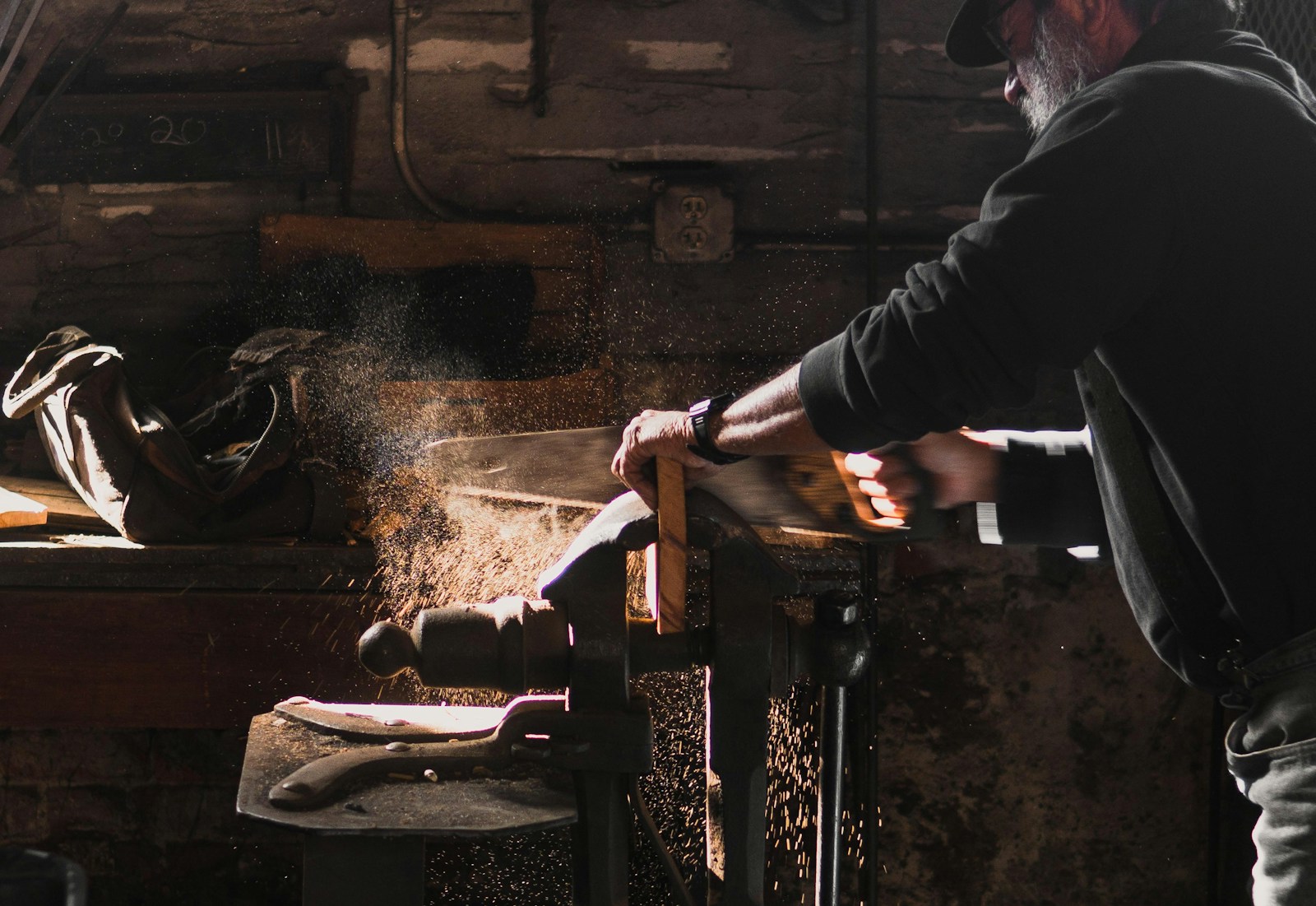
Only now does the good timber get cut, and it gets cut slowly, because solid wood moves.
Oak coming out of a kiln at eight per cent moisture will still shift as it acclimatises to a room. So the stock is rough-cut oversize, stickered, and left in the workshop for a week to find its shape. Boards that cup or twist in that week are set aside. Roughly one in six is set aside, and that waste is priced in from the start.
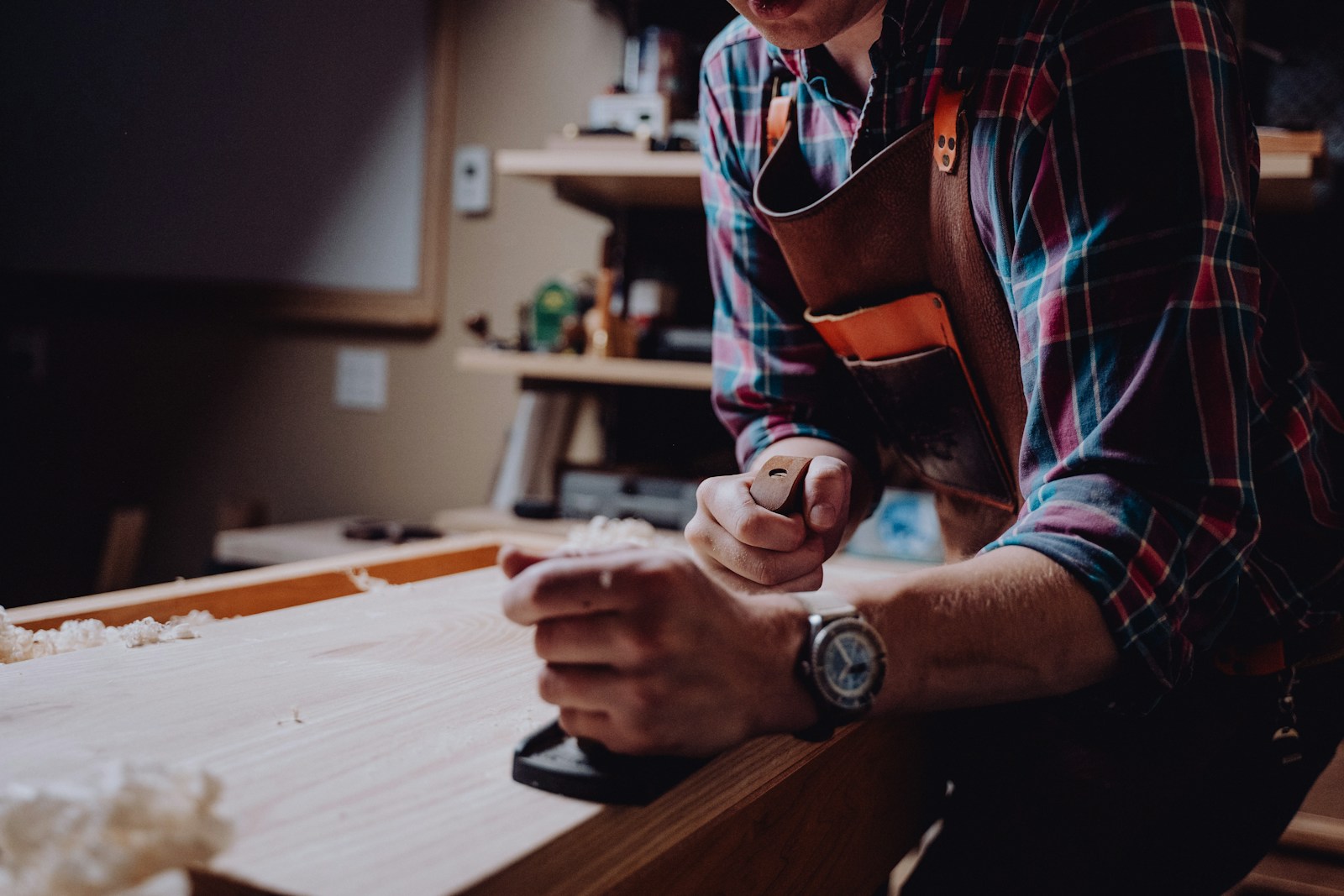
The joints are mortise and tenon, cut on a machine and fitted by hand. The machine gets you to within a quarter of a millimetre; the hand work is what closes that quarter. A chair joint that is merely close will loosen in five years, because a chair is a structure under constant racking load, unlike almost anything else in a house.
Weeks ten and eleven: the finish
Sanding runs to 240 grit, no finer, because a surface polished beyond that stops taking oil evenly and starts to look like plastic under a lamp.
Then soap. We finish most of our oak with soap flakes rather than lacquer or hardwax: three applications, wet, worked in with a cloth, twenty-four hours between coats. Soap leaves the timber pale and open, it feels like wood rather than like a coating, and when it is damaged it can be repaired by the owner with a bucket. Lacquer, when it is damaged, has to go back to a workshop.
The cost of soap is maintenance. It wants redoing every year or two on a chair in daily use. We say this clearly before anyone commits, and about a third of clients choose hardwax oil instead, which is the honest trade and we build it either way.
Why we still do it
Eleven weeks is indefensible on any measure except one: the chair fits the room and the people it was drawn for, and it will still be in that room in thirty years.
We do not commission chairs for every project. When the dining table is the centre of the house, and the client intends to keep it for a lifetime, eleven weeks stops looking like a long time. It is roughly the same wait as a good sofa, for an object that will outlive it by decades.

