Field notes
·
·
5 min read
Notes on north light
North light does not move much, and that is the whole argument for it. A short note on why we test every plaster sample on the coldest wall in the building.

Clients often ask for south-facing rooms and mean something else. They mean warmth, and warmth is easy to add. What is hard to add is evenness, and north light is the only light that gives it to you for free.
What north light actually is
A north window in Copenhagen never sees the sun directly. What it collects instead is the whole dome of the sky — a very large, very soft source that barely moves between ten in the morning and four in the afternoon. The practical consequence is that a north room has almost no shadow theatre. Nothing rakes across the floor at half past three. Nothing blows out the far wall in July.
Painters have known this for four centuries, which is why every studio window in northern Europe faces the same way. We use the same reasoning for rooms nobody would call a studio: dining rooms where you want to see faces evenly, bathrooms where you want to see your own skin honestly, and any room holding a material we spent three months choosing.
The trade-off is real. North rooms run two or three degrees cooler and they read as blue if you let them. Everything below is about paying that bill on purpose rather than by accident.
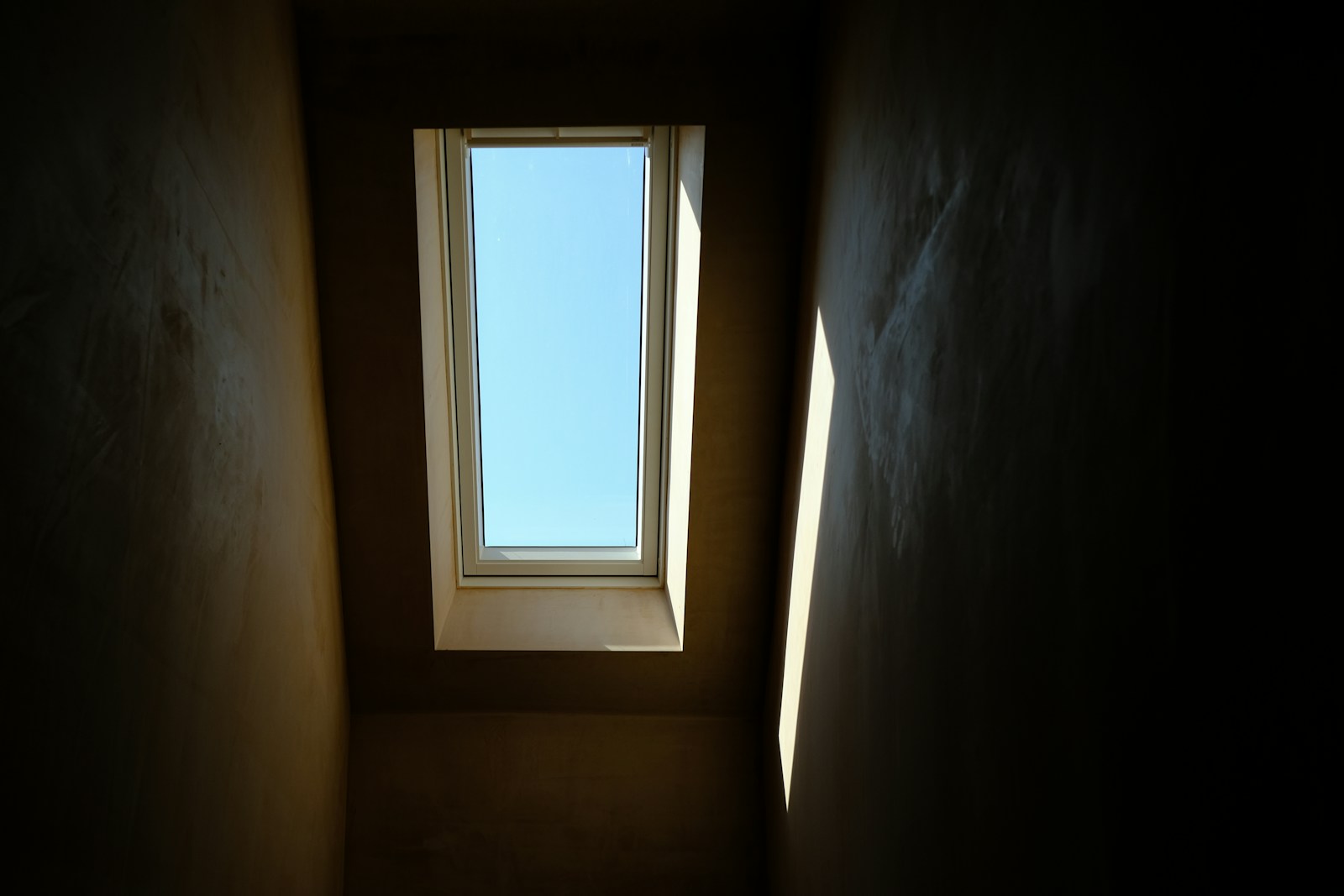
Why we sample on the north wall
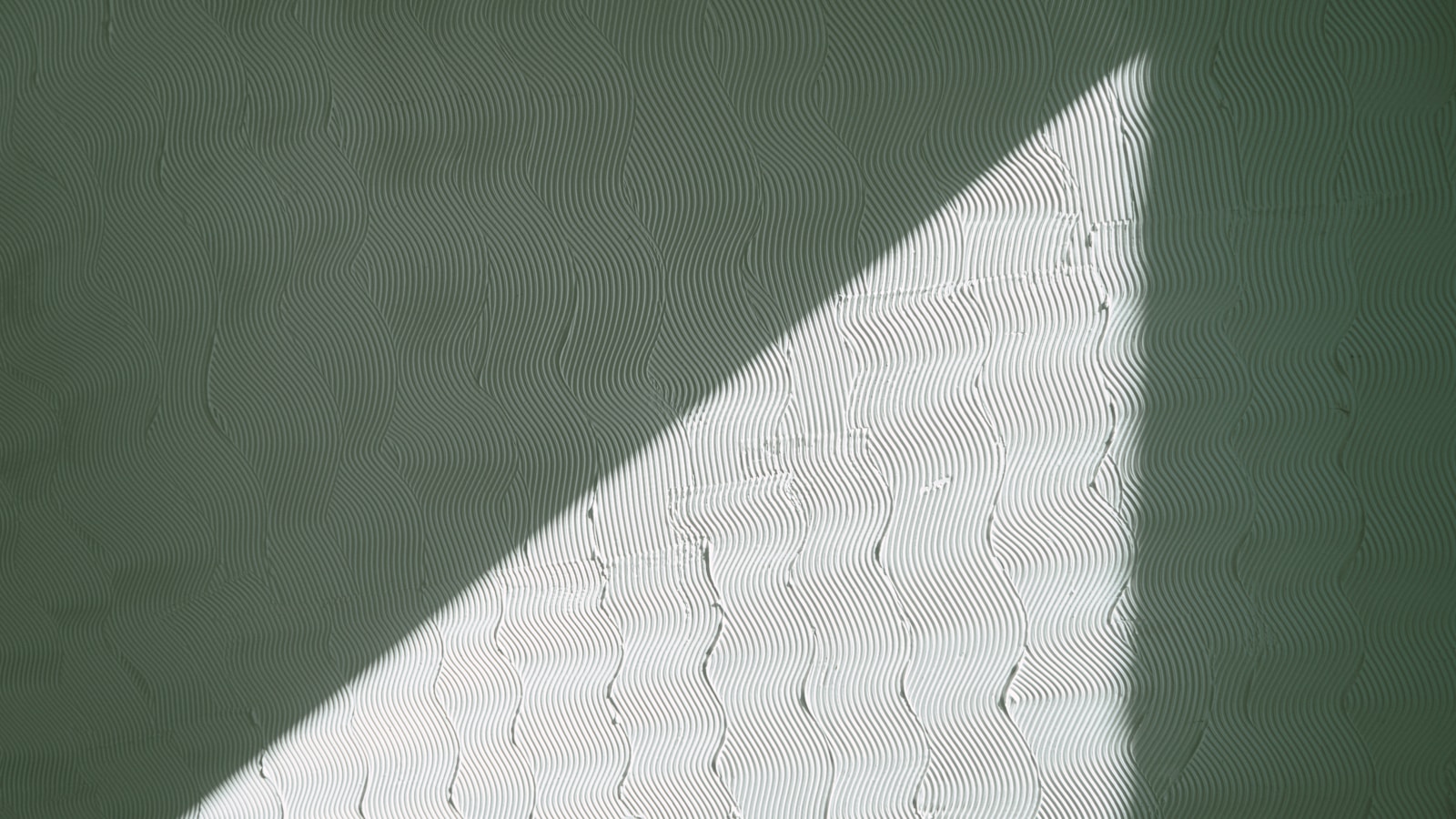
A lime plaster that looks generous in afternoon sun can turn grey and chalky under a north window. So every sample board goes on the coldest wall first. If it holds its warmth there, it will hold it everywhere.
This inverts how most sampling is done. The usual method is to tape three swatches where the light is best, choose the one that sings, and discover in November that it was the light singing and not the plaster. We would rather be disappointed in week two than in month eleven.
The test is simple and we run it on every project. Three boards, minimum A3, on the north wall. Photograph them at nine, at one, and at six, on the same phone, with the white balance locked. If a sample loses its body in any one of those frames, it is out — however beautiful it looked in the supplier’s showroom.
Rooms that want it, rooms that do not
The corollary is that we rarely put the kitchen on the north side, and almost always put the drawing board there. Kitchens are worked in early and late; they want the sun on them and they can carry the drama of it. Anything involving colour judgement — a wardrobe, a bathroom mirror, a desk — wants the north wall.
Bedrooms are the argument we have most often. Clients want morning sun in the bedroom, and we understand why, but morning sun in a Copenhagen bedroom means four-thirty in June. A north bedroom with a good lamp beside the bed is a kinder room to live in than an east one with a blackout blind fighting it.
There is one room that genuinely needs both, and that is the room where people gather. When a plan allows it, we try to give the main living space light from two sides — north for the evenness, west or south for an hour of warmth at the end of the day. Two-sided rooms feel twice their size, and the reason is not width. It is that the shadows have somewhere to go.
Working with what the building already has
Most of our work is renovation, which means the orientation is decided and we are negotiating with it. The levers that remain are surface, depth and reflectance.
Surface first. A north room with a flat matte wall will read cold, because a matte surface gives you back the colour of the sky and nothing else. The same room in a burnished lime plaster picks up a faint sheen at grazing angles and returns a little warmth from the aggregate. That is the whole reason we burnish rather than leave the float finish.
Depth second. Deep reveals eat north light badly, because the sky source is already diffuse and a deep reveal cuts the visible sky in half. Where we can, we splay the reveal or bring the plaster right to the frame. Where we cannot, we accept it and put a lamp there.
Reflectance last, and this is the one people get wrong. A very white ceiling in a north room does not make it warmer, it makes it bluer, because it is bouncing sky. A ceiling half a step warmer than the walls does more for a north room than any amount of additional lumens.
A short checklist
Before we sign off a north-facing room we check five things. That the plaster sample was approved on that wall and not another. That the ceiling is warmer than the walls, not cooler. That there is a warm light source at working height, not only overhead. That the joinery timber was chosen against the same wall. And that the client has seen the room at four in the afternoon in winter, which is the hour the room will be judged by for half the year.
None of this is expensive. It costs one extra site visit and a slightly stubborn approach to sampling. What it buys is a room that looks the same in February as it did the day you photographed it.

